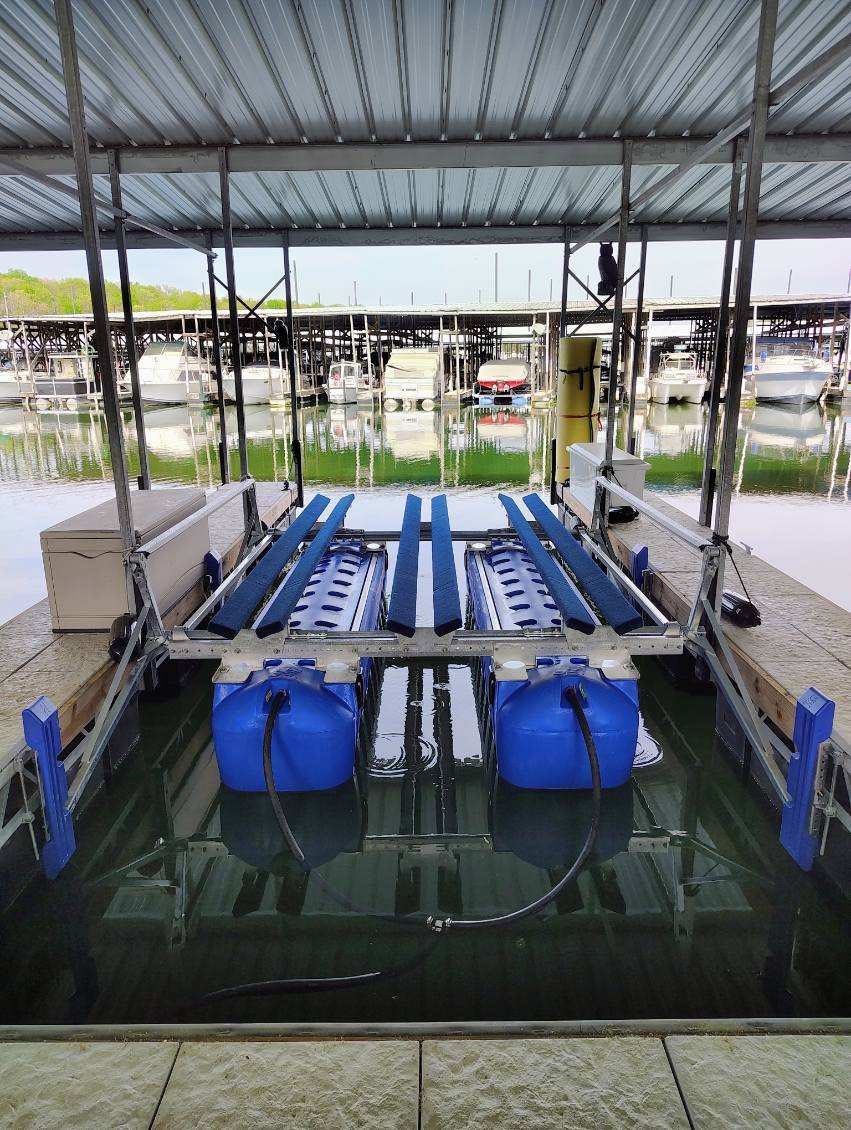
If your boat sits in the water on a regular basis, your boat lift is one of the hardest-working pieces of equipment at your dock. Most boat owners don’t think about boat lift repair until something goes wrong – and by then, the damage can be more expensive to fix. Catching problems early is the key to keeping your boat safe and your lift running smoothly for years to come.
Here are five signs your lift may need attention, and what you should do if you spot them.
1. The Lift Is Moving Slowly or Unevenly
One of the earliest signs of a problem is a lift that no longer raises or lowers at a consistent speed. If one side moves faster than the other, or the entire lift seems to struggle under the weight of your boat, it’s time to take a closer look.
Common causes include:
- Worn or damaged cables
- A motor that’s losing power or starting to fail
- Misaligned bunks putting unequal stress on the frame
If your lift is slow or uneven, don’t keep running it. Continued use can worsen the damage and put your boat at risk. Reach out to a qualified technician for a boat lift maintenance inspection before using it again.
2. You Hear Unusual Noises During Operation
A healthy lift runs quietly. Grinding, squealing, or popping sounds are red flags. These noises often point to:
- Corroded pulleys or bearings
- Cable friction from fraying or misrouting
- Loose hardware vibrating under load
Any time your lift starts sounding different than usual, that’s your cue to stop using it and schedule a service call. Unusual noises are rarely “just noise” – they usually mean something is wearing out.
3. The Boat Lift Is Not Working at All
If you press the button and nothing happens, the issue could be electrical or mechanical. A boat lift not working can stem from several sources:
- Tripped circuit breaker or blown fuse
- A failed motor or capacitor
- Water intrusion in the electrical components
- Corrosion on the terminals or wiring
Before assuming the worst, check your breaker panel. If the power is fine but the lift still won’t respond, it’s best to call in a professional. Electrical issues near water are serious and shouldn’t be DIY’d unless you have the proper training.
4. Visible Rust, Corrosion, or Structural Damage
Boat lifts live in a tough environment. Constant exposure to water – especially saltwater – accelerates corrosion. If you notice rust building up on cables, frame welds, or hardware, it’s not just cosmetic. Rust weakens structural integrity over time and can lead to cable failure, which is a serious safety hazard.
Look for:
- Orange or brown staining on cables or frame joints
- Flaking metal on welded sections
- Sagging or bent structural components
- Frayed or kinked lift cables
Cable replacement is one of the most common boat lift repair jobs. If you’re seeing any fraying, don’t wait – cables under load can snap without warning.
Also worth checking: is your lift properly sized for your boat? If a lift is consistently overloaded, it will wear out much faster. You can learn more about finding the right boat lift capacity for your setup.
5. The Lift Sits Crooked or Won’t Hold Position
If your boat doesn’t sit level in the lift, or the lift slowly sinks after being raised, there’s likely a problem with the motor brake, the cable drum, or the mounting hardware. A lift that won’t hold position is a safety issue – your boat could shift or fall.
Signs to watch for:
- One side of the boat is noticeably lower than the other
- The lift drifts downward minutes after being raised
- Hardware looks loose or bent at the dock mounting points
This is a situation where professional boat lift service near me is the right call. A technician can assess whether you need a repair or whether it’s time to consider a new lift installation.
What to Do Next: Repair or Replace?
Sometimes a repair is all you need. Other times – especially with older lifts – the cost of ongoing repairs starts to outweigh the benefits. If your lift is more than 15-20 years old and you’re facing multiple issues at once, it may be time to explore a replacement.
A modern HydroHoist boat lift is built to last with high-quality materials and engineering that can handle years of heavy use. If you’re weighing your options, read our guide on choosing the right boat lift for your dock, or explore the benefits of a new boat lift before making a decision.
FAQ: Boat Lift Repair Questions
1. How do I know if my boat lift cables need to be replaced?
Look for visible fraying, kinking, or rust on the cables themselves. If a cable has broken strands or discoloration, it should be replaced immediately. Most professionals recommend proactive cable inspection at least once per season.
2. How much does boat lift repair typically cost?
Costs vary depending on the type of repair. Simple maintenance tasks like lubricating cables or tightening hardware can be inexpensive, while motor replacements or full cable replacements typically run several hundred dollars or more. Getting a professional assessment is the best way to understand what you’re working with.
3. Is it safe to keep using a boat lift that’s making noise?
No. Unusual sounds usually mean something is failing. Continuing to operate the lift can accelerate the damage and create a safety risk for your boat or anyone near the dock.
Don’t Ignore the Warning Signs
Your lift works hard every season, and regular boat lift maintenance is the best way to avoid costly repairs down the road. Whether you’re dealing with a minor mechanical issue or a lift that’s completely stopped working, acting quickly protects both your investment and your boat.
At Cumberland Marine Works LLC, we’re Middle Tennessee’s premier authorized HydroHoist dealer and installer. We offer boat lift repair Tennessee services with guaranteed lowest pricing on new lifts, the largest on-hand inventory in the area, and fast installation turnaround times. Our team is focused on finding the right customized solution for every customer.
Ready to get your lift back in shape? Contact Cumberland Marine Works today for a professional inspection or to explore your options for a new HydroHoist lift.