Before starting residential dock construction, match the dock type to how your lake’s water level behaves, plan how you’ll use the dock (boating, a boat lift, slips, a swim platform), decide on boat lift compatibility up front, and work with a builder who designs around your shoreline and evaluates your property in person. Cumberland Marine Works, based in Gallatin, TN, designs and builds custom residential and commercial docks across Middle Tennessee, the rest of Tennessee, southern Kentucky, and northern Alabama.
1. Start With Your Lake and Its Water Levels
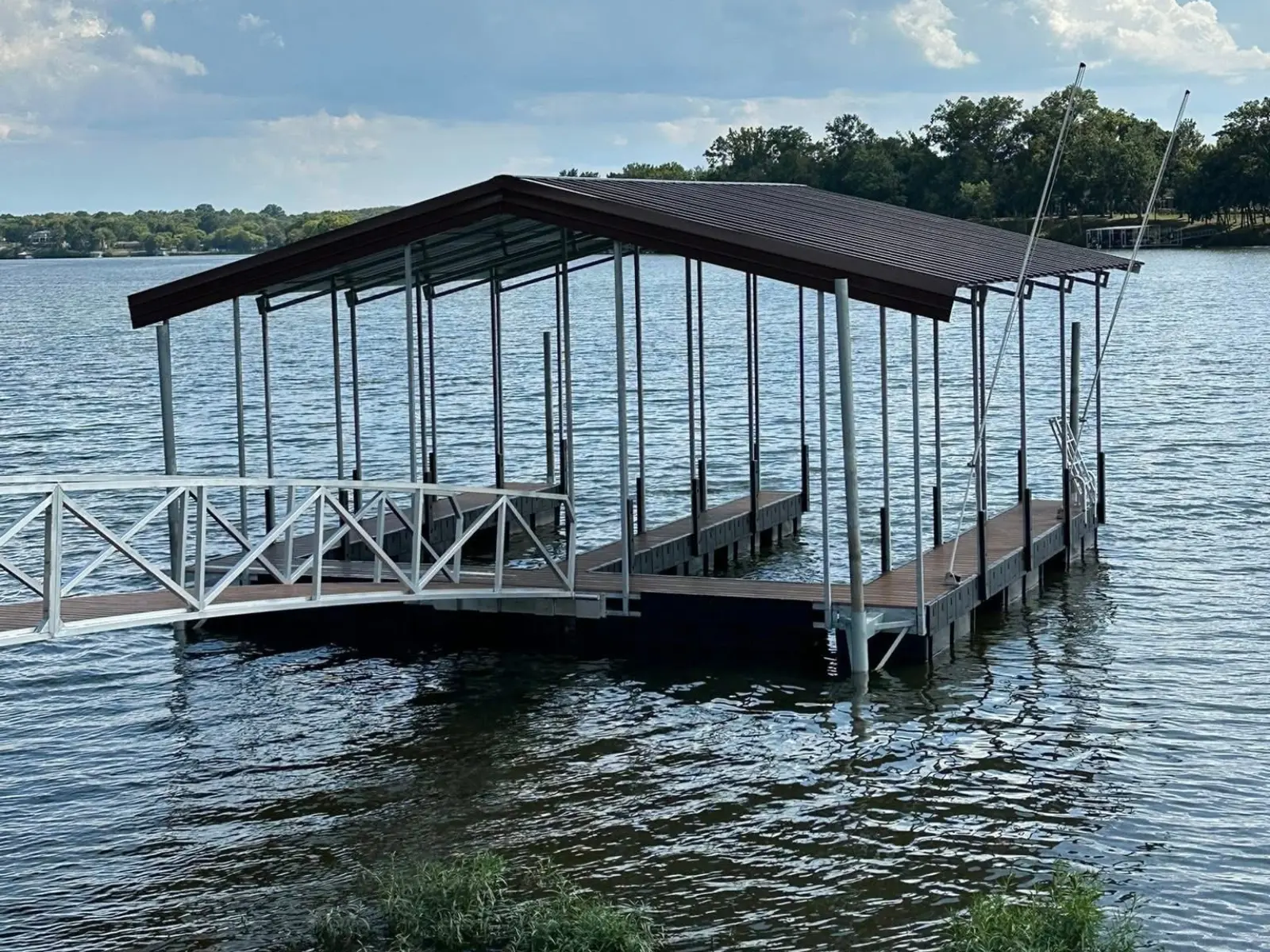
The first decision in residential dock construction is choosing between floating and fixed docks, which comes down to how your dock will respond to the water. Floating docks rise and fall with the water level, which makes them a strong fit for lakes like Old Hickory Lake and Center Hill Lake, where levels shift through the year because of seasonal rainfall and reservoir management. Fixed docks are anchored into the lakebed with pilings (usually treated wood, steel, or concrete) and work best where water depth stays consistent. On a lake with changing levels, a fixed dock can leave you with an awkward climb down to your boat when the water drops, or a submerged walkway when it rises.
In some locations, a hybrid dock system combines the stability of a fixed dock with the adaptability of a floating one. Beyond water levels, consider how exposed your shoreline is to wind and waves and how much long-term maintenance you want to take on.
2. Plan How You’ll Use the Dock
Every Cumberland Marine Works project is custom designed around your water depth, shoreline layout, usage needs, and long-term goals. Before you design, decide what the dock needs to do:
- Your boat: whether the dock fits your current boat and usage needs.
- Slips, swim platforms, and dock extensions: Cumberland Marine Works offers all three.
- A boat lift: plan for it early (see the next section).
- Who uses it: a private lake home or waterfront estate has different needs than a multi-slip dock or a shared dock for a boat club.
3. Decide on a Boat Lift Early
HydroHoist boat lifts are designed to work with both fixed and floating dock systems, so your dock type and your lift don’t have to compete. Cumberland Marine Works designs dock structures with lift compatibility in mind and offers dock reinforcements for lift systems, along with boat lift installation, upgrades and replacements, and lift relocation and retrofits.
Cumberland Marine Works carries the largest on-hand inventory of new HydroHoist boat lifts in Middle Tennessee and surrounding areas, with financing options and quick installation turnaround.
4. Understand Custom Dock Construction and Frame Materials
No two shorelines are the same, which is why custom dock construction starts with your property rather than a standard layout. Cumberland Marine Works builds custom steel docks on a Hot Dipped Galvanized Steel frame that is designed, fabricated, and available in custom designs. The galvanizing is there to resist corrosion, and the frame is designed to withstand rough waters better than a standard box truss dock frame.
5. Residential vs. Commercial Dock Construction
Residential docks are built for homeowners who want a functional lakefront dock for relaxation, boating, and family time. Commercial dock construction covers everything from single-slip docks to full marina projects, including multi-slip docks, commercial waterfront properties, and boat clubs and shared docks. Cumberland Marine Works builds both, and every project starts the same way: design around the site and the way the dock will be used.
6. What to Expect From a Residential Dock Builder
When you compare residential dock builders, look for a process that starts with your property, not a sales pitch. At Cumberland Marine Works, a family-driven company with rugged marine construction experience, that means:
- An honest site visit to start every assessment, with no pressure and no upselling.
- A design based on your site: water depth, shoreline layout, usage needs, and long-term goals.
- Honest repair-or-rebuild guidance based on safety and long-term value, if you already have a dock.
- Lift-ready dock design so a boat lift can be added safely.
- A free quote for your project.
The team serves waterfront property owners on Old Hickory Lake, Percy Priest Lake, Center Hill Lake, Dale Hollow Lake, Kentucky Lake, Guntersville Lake, and surrounding waterways.
7. Plan for Maintenance, Repair, and Replacement
Every dock needs routine care. Fixed docks have pilings in the water year-round, so moisture, algae growth, and general wear make periodic inspection of pilings and connection points important. Floating docks rely on flotation components and anchoring hardware, which should be checked regularly. Summer heat and algae growth affect either type.
Signs your dock needs attention include cracked, soft, or uneven decking; floats that sit low or feel unstable; worn or broken slips; visible frame or support damage; or a dock that no longer fits your boat or usage. Not every dock needs to be replaced. When you’re weighing boat dock repair or replacement, the key question is whether the dock frame is structurally sound. If it is, remodeling such as decking replacement, float upgrades, slip additions, swim platforms, or dock extensions can bring an older dock back to full function. If the frame is compromised or remodeling would cost more than building new, replacement makes more sense.
Frequently Asked Questions
1. What should I know before starting residential dock construction?
Start with your lake’s water-level behavior to choose between a floating, fixed, or hybrid dock. Then plan how you’ll use the dock, decide on a boat lift early, and choose a builder who designs around your shoreline and assesses your property in person.
2. How do I choose between a floating and a fixed dock?
Neither is universally better. Floating docks suit lakes with fluctuating water levels, such as Old Hickory Lake and Center Hill Lake. Fixed docks suit areas with consistent water depth. Your shoreline, wind and wave exposure, and maintenance preferences also matter.
2. Can I add a HydroHoist boat lift to a new dock?
Yes. HydroHoist boat lifts are designed to work with both fixed and floating docks, and Cumberland Marine Works designs dock structures with lift compatibility in mind.
3. Does Cumberland Marine Works build commercial docks and marinas?
Yes. Projects range from single-slip docks to full marina projects, including multi-slip docks, commercial waterfront properties, and boat clubs and shared docks.
4. Which areas does Cumberland Marine Works serve?
The company is based in Gallatin, TN, and serves Middle Tennessee (including Gallatin, Hendersonville, Mount Juliet, Lebanon, and Nashville), the rest of Tennessee, southern Kentucky (including Dale Hollow Lake), and northern Alabama (including Guntersville Lake).
5. Should I repair or replace an older dock?
It depends on whether the frame is structurally sound. If it is, targeted remodeling is often the better choice. If the frame is compromised, replacement may make more sense. Cumberland Marine Works offers free on-site assessments to help you decide.
Plan Your Dock With Cumberland Marine Works
Whether you’re planning a brand-new dock, upgrading an existing one, or exploring options for your waterfront property, Cumberland Marine Works is ready to help. Get a free quote today.